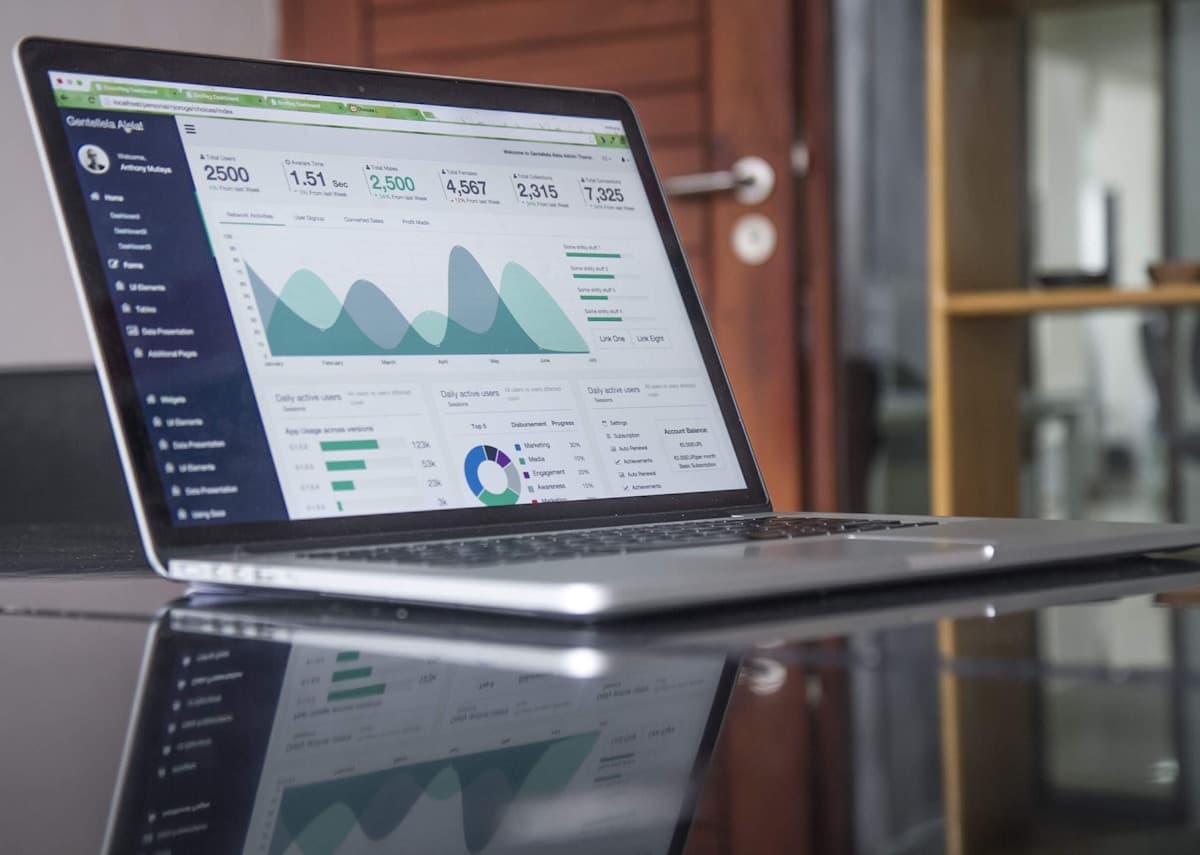
AI Agent Reporting & Analytics: The 2026 Small Business Guide
Move from passive dashboards to active decisions. Learn how AI reporting agents save 12+ hours/week, catch margin leaks, and ground your business in BI.
Vigor
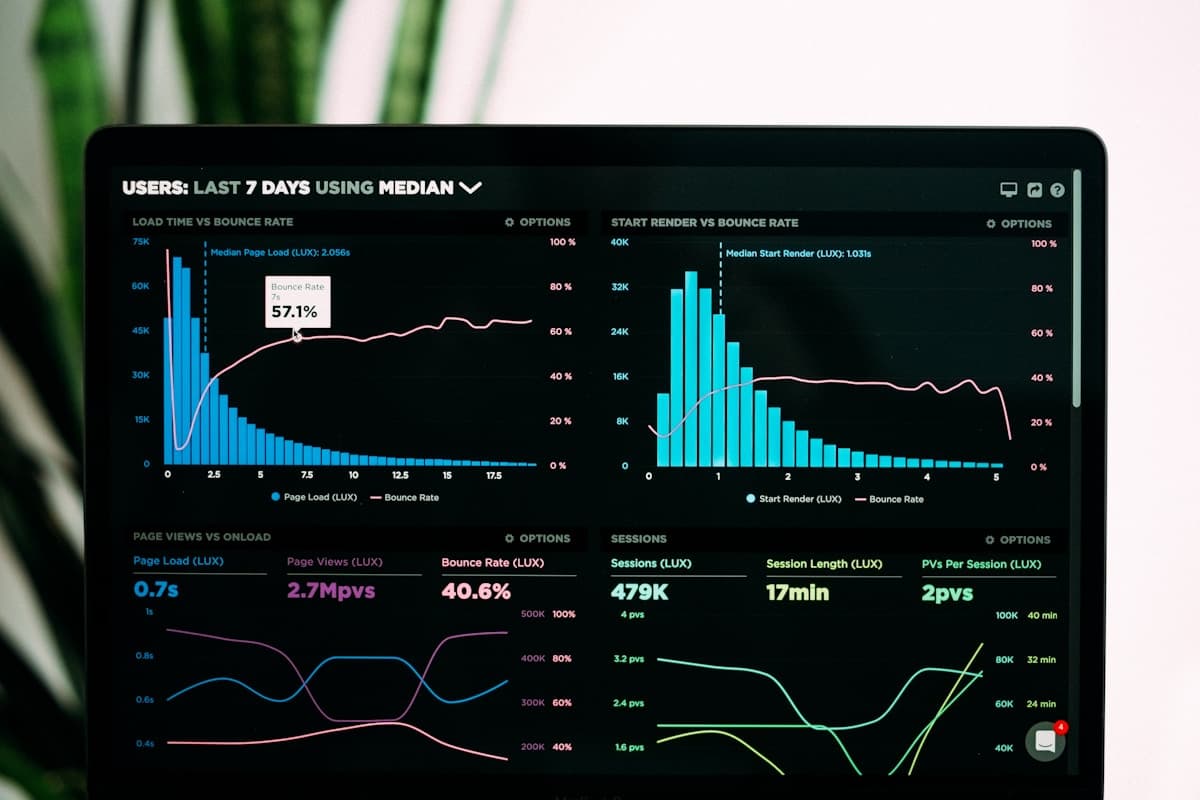
AI Agent Reporting & Analytics: From Data Drudgery to Growth Decisions (2026)
Stop checking dashboards. Start receiving decisions. In 2026, the competitive advantage for small business owners isn’t having access to data—it’s having an AI agent that reasons over that data on a schedule. This guide moves you from manual "swivel-chair" reporting to an autonomous reporting loop that saves hours and catches margin leaks before they become crises.
TL;DR: The 60-Second Summary
- Dashboards are passive; Agents are active. Dashboards wait for you to log in; agents push insights and suggested actions to your chat app (WhatsApp/Telegram/Slack).
- The BI-First Rule: AI without grounded Business Intelligence (BI) is just a "hallucination engine." Connect your real Shopify, GA4, and Ads data first.
- The ROI Math: A single automated morning brief can save 4–8 hours per week per operator. At a $50/hr rate, that’s $800–$1,600/month in reclaimed time.
- Guardrails are Mandatory: Never let an agent move money or change prices without a human "Approve" click. Use least-privilege API scopes.
- Get Started: Pilot a "Morning Pulse" brief this week. Expand to anomaly detection and lead qualification once trust is built.
Why Traditional Reporting Is Failing Your Business
Most small business owners suffer from "Dashboard Fatigue." You have 5–10 tools (Shopify, Meta Ads, Google Analytics, Stripe, Gorgias, etc.), each with its own login and its own version of the truth.
Before AI agents, you had two bad options:
- The Manual Grind: Spend 45 minutes every morning copying numbers into a spreadsheet to see if you actually made a profit yesterday.
- The Ignorance Trap: Only check your numbers once a week (or month), missing critical shifts in ad performance or refund spikes until it’s too late.
In 2026, there is a third way: Agentic Reporting.
Comparison: Dashboards vs. AI Reporting Agents
| Feature | Traditional Dashboards | AI Reporting Agents (2026) |
|---|---|---|
| Interaction | Passive (You go to it) | Active (It comes to you) |
| Context | Single-source data | Cross-platform reasoning |
| Insight | Charts and graphs | Narratives and actions |
| Latency | Usually T-1 or T-7 | Real-time / Scheduled |
| Actionability | Zero (Read-only) | High (Drafts tasks/replies) |
| Human Effort | High (Pull, Parse, Plan) | Low (Review, Approve, Steer) |
The Anatomy of an AI Reporting Loop
A functioning agentic reporting system doesn’t just "chat." It follows a structured loop that mirrors a high-performing human analyst:
- Collect (07:00 AM): The agent calls your Shopify, Meta, and GA4 APIs. It normalizes the data (e.g., matching Shopify net sales to Meta ad spend).
- Reason (07:15 AM): It compares today’s numbers to your 7-day and 30-day medians. It looks for anomalies—like a 20% drop in conversion rate or a SKU that is selling 3x faster than normal.
- Propose (07:20 AM): It drafts 2–3 suggested moves. Example: "Your ROAS on Campaign X is below 1.5. Suggest pulling $50/day and moving it to Campaign Y which is at 3.2."
- Deliver (07:30 AM): It sends a concise brief to your preferred channel. See our guide on how to automate your Shopify morning brief.
Mini-Case: 12 Hours Saved and a $3,400 Margin Catch
Context: A 7-person DTC apparel brand (~$320k/mo revenue) was buried in tabs. The founder spent his first hour every day manually calculating "Blended ROAS" and checking inventory for their top 5 SKUs.
The Intervention: They deployed a BiClaw Reporting Agent with three skills: The Morning Pulse, Inventory Monitor, and Anomaly Alerts.
The Results (First 30 Days):
- Time Reclaimed: 12.5 hours per week of the founder’s time returned to the business.
- The "Catch": On Day 11, the agent flagged a "Refund Spike" of 14% on a specific SKU. It traced the issue to a sizing error in the PDP (Product Detail Page) copy. They fixed the text in 10 minutes, preventing an estimated $3,400 in further returns.
- Efficiency Lift: The team moved from a "Weekly Review" cadence to a "Daily Adjustment" cadence, lifting overall site conversion by 8% through faster price and creative tweaks.
Guardrails: How to Stay Safe While Moving Fast
Autonomous doesn’t mean unsupervised. As outlined in the NIST AI Risk Management Framework, security is about governed access and human oversight.
- Least Privilege: Your reporting agent needs read access to sales, but it should never have delete access to your customer database.
- Human-in-the-Loop (HITL): Any action that changes a price, sends a refund, or moves ad budget must require a manual "Approve" click in your chat app first. See our guide on agent ops and audits.
- Immutable Logs: Ensure every query and response is logged in a central workspace. This turns "mystery failures" into solvable audits.
5 Reporting Tasks to Automate Today
- The 07:30 AM Brief: Revenue, spend, ROAS, and top 3 anomalies.
- Low-Stock Alerts: Proactive pings when a high-velocity SKU has <7 days of cover.
- Competitor Price Monitoring: Track your top 5 rivals and get an alert if they drop price or launch a promo. Learn more: /blog/the-dtc-growth-engine-automation-2026.
- Customer Sentiment Rollup: A weekly summary of helpdesk ticket themes (e.g., "Why is shipping slow in Texas?").
- Ad Creative Decay: Flag when a top-performing ad’s CTR drops by >15% over 3 days, suggesting it’s time for a refresh.
The Comparison List: Do This, Not That
- Do: Declare one "Source of Truth" for revenue (e.g., Shopify). Don’t: Let your agent argue with you about why GA4 and Shopify don’t match.
- Do: Use a dedicated channel for alerts. Don’t: Bury reports in your email inbox where they will be ignored.
- Do: Start read-only for at least 7 days to build trust. Don’t: Enable "Auto-Apply" for ad budgets on day one.
- Do: Link every insight to the raw report. Don’t: Accept a number from an agent without a source link.
The ROI of Agentic Analytics
| Metric | Manual Effort | Agentic Effort | Estimated Savings |
|---|---|---|---|
| Morning Reporting | 5h / week | 15m / week | $950 / mo |
| Inventory Tracking | 3h / week | 5m / week | $570 / mo |
| Competitor Monitoring | 4h / week | 10m / week | $760 / mo |
| Total | 12h / week | 30m / week | $2,280 / mo |
Calculated at a $50/hr fully loaded labor rate.
Implementation: Your 14-Day Roadmap
- Days 1–3: Audit your current reporting. What are the 5 numbers you check every day? What 3 moves do you make based on those numbers?
- Days 4–7: Connect your data sources to a BI-first assistant. Start with read-only morning briefs. See: /blog/why-your-business-needs-a-bi-first-ai-assistant-beyond-the-empty-box.
- Days 8–10: Tune your anomalies. If the agent pings you too much for minor shifts, raise the "significance threshold."
- Days 11–14: Enable one "Action Draft." For example, if a SKU is low, let the agent draft a purchase order for you to review.
Conclusion: Moving Toward the "Business Factory"
In 2026, you shouldn’t be a "user" of software; you should be a "manager" of agents. By automating your reporting and analytics, you reclaim the mental bandwidth needed to focus on brand, product, and strategy.
Stop digging for data and start acting on it. For more on the shift from tools to autonomous workers, read our guide on digital workers for SMBs.
Related Reading
- How to Automate Your Shopify Morning Brief
- AI Assistant vs Chatbot: Which Do You Need?
- Best Business Process Automation Tools in 2026
- From SOP to Autopilot: Using AI Agents
- Multi-Agent AI Systems for Small Business
Ready to turn your data into a teammate? Start your 7-day free trial of BiClaw today at https://biclaw.app. We ship with the BI skills and connectors you need to start operating on autopilot by tomorrow morning.
Sources: McKinsey — The Economic Potential of Generative AI | NIST AI Risk Management Framework | Shopify Analytics Help Center