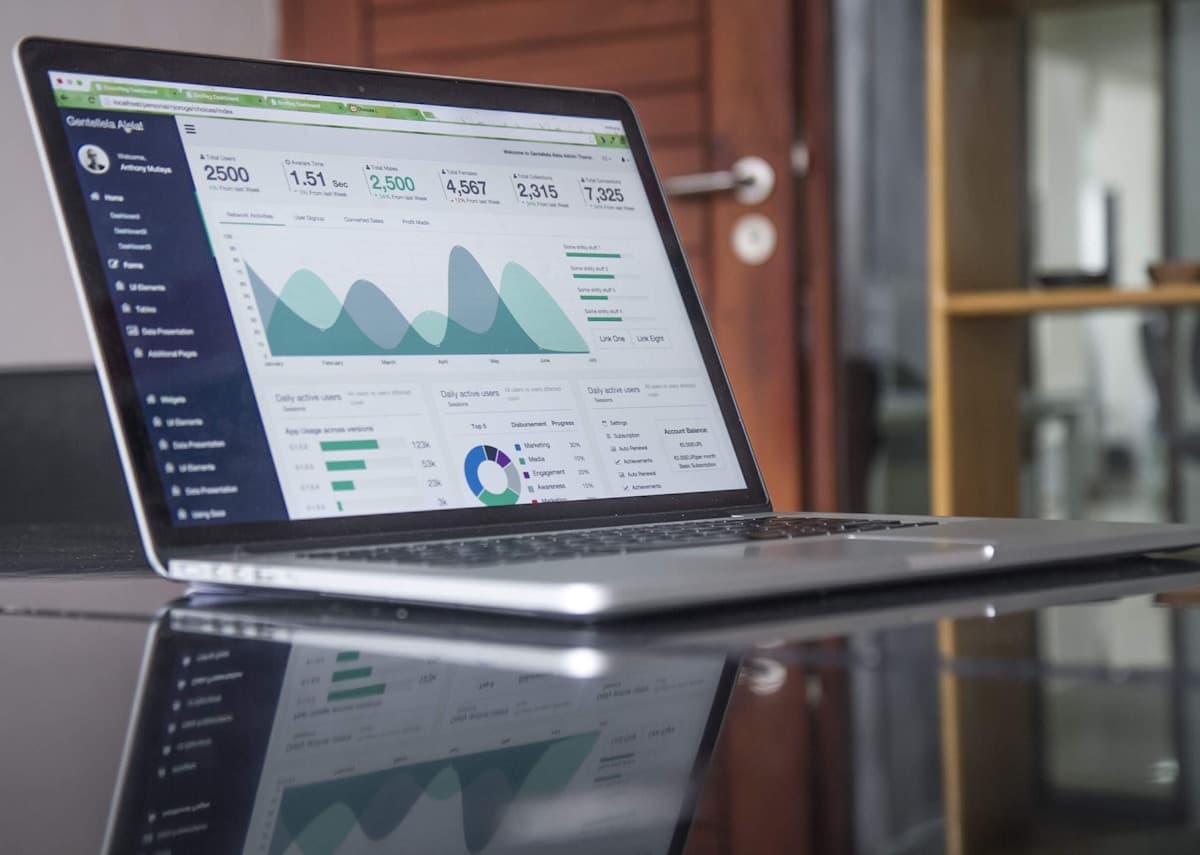
Business Intelligence Tools for Small Business: What Actually Works in 2026
The honest guide to BI tools for small businesses in 2026. We compare Looker Studio, Tableau, BiClaw, and more — and show what actually moves the needle.
Vigor
Which Business Intelligence Tools Actually Work for Small Businesses in 2026?
 Business Intelligence Tools for Small Business: What Actuall
Most BI tool guides are written for enterprise data teams with dedicated analysts, six-figure software budgets, and a tolerance for 6-month implementations. If you're running a small e-commerce business or a growing Shopify store, that advice isn't just unhelpful — it's actively misleading.
This guide is different. It's written for the store doing $20k–$200k/month that needs real answers from their data without hiring a data scientist. Here's what actually works, what to avoid, and how to think about the decision.
TL;DR
- Most small businesses need a BI tool, not a BI platform — focus on answering specific questions, not building a data warehouse
- Google Looker Studio is the best free starting point — connects to Shopify, Google Analytics, and ad platforms without code
- Tableau and Power BI are overkill for most SMBs — steep learning curves, high costs, and features you won't use for 2 years
- Purpose-built e-commerce BI tools (BiClaw, Glew, Polar Analytics) outperform general tools for stores under $500k/month — they're pre-configured for the questions you actually ask
- The biggest BI mistake small businesses make is collecting data without acting on it — set up alerts, not just dashboards
- Start with profit margin visibility — it's the highest-leverage insight and most stores don't have it clearly
- A BI tool identified $8k/month in margin leaks for a $45k/month Shopify store — see the case study below
Why Small Businesses Struggle with Business Intelligence
The data problem for small e-commerce businesses isn't a lack of data — Shopify, Google Analytics, Meta Ads, and email platforms generate enormous amounts of it. The problem is fragmentation. Your revenue lives in Shopify. Your acquisition costs are in Meta and Google. Your margins are in your supplier invoices. Your customer behavior is in your email tool.
No single platform shows you the complete picture by default, which means most small business owners are making decisions on incomplete information. They know their revenue. They often don't know their actual margin. They can see traffic but not which traffic converts profitably.
Business intelligence tooling exists to solve exactly this problem — connecting disparate data sources and presenting the combined view in a format that's actionable. According to Gartner's research on analytics and BI platforms, the primary value driver for SMBs is not sophistication but speed-to-insight: how fast can a non-analyst get from raw data to a decision?
The challenge is choosing the right tool for your stage and use case.
For context on how analytics fits into a broader store intelligence setup, see our guide to ecommerce analytics tools in 2026.
The BI Tool Landscape for SMBs in 2026
General-Purpose BI Platforms
Google Looker Studio (free) is the most accessible entry point. It connects to Google Analytics, Google Ads, Shopify (via third-party connectors), spreadsheets, and dozens of other sources. You can get started at lookerstudio.google.com — no credit card required. The learning curve is real — building a useful dashboard from scratch takes several hours — but the output is genuinely powerful and it costs nothing to run.
The limitation: Looker Studio requires you to know what questions to ask. It won't surface the insight that your best-selling product is also your lowest-margin product unless you build a report specifically to show that. It's a tool for people who already think in data.
Microsoft Power BI ($10–$20/user/month) sits in an interesting middle ground. It's more powerful than Looker Studio for complex transformations and has better native connectors for business software ecosystems (Microsoft 365, Dynamics). But for a Shopify-first business, the Shopify connector isn't as robust as purpose-built tools, and you'll spend significant setup time configuring things that specialized tools handle automatically.
Tableau is enterprise-grade software with enterprise-grade pricing. Tableau Desktop starts at $70/user/month. For most SMBs, this is impossible to justify — you're paying for data visualization capabilities that your team won't use and an implementation complexity that requires either dedicated analyst time or expensive consultants.
Purpose-Built E-commerce BI Tools
Glew is one of the longer-standing e-commerce analytics platforms. It connects to Shopify, Amazon, WooCommerce, and most major ad platforms, and provides pre-built reports on LTV, cohorts, product performance, and marketing attribution. Pricing starts around $79/month. The strength is in customer analytics — LTV modeling and cohort tracking are solid. The weakness is that the UI hasn't kept pace with newer competitors.
Polar Analytics is a newer entrant focused heavily on the DTC brand space. Strong on multi-channel attribution and marketing performance. The no-code data model is genuinely accessible. Pricing starts around $300/month for meaningful store volumes, which puts it out of reach for smaller merchants.
BiClaw takes a different approach — instead of requiring you to build dashboards, it runs proactive monitoring and surfaces what matters. Connect your Shopify store and ad platforms, and it sends you a daily brief with the metrics that moved, the anomalies that need attention, and the specific recommendations worth acting on. For founders who don't want to become data analysts, this is the most practical entry point for getting real BI value without building expertise.
Comparison Table: BI Tools for Small E-commerce Businesses
| Tool | Starting Price | Setup Time | Shopify Integration | Best For | Weakness |
|---|---|---|---|---|---|
| Google Looker Studio | Free | 3–8 hours | Via connector | Budget-conscious stores with some data literacy | Requires you to build everything yourself |
| Microsoft Power BI | $10/user/mo | 5–15 hours | Via connector | Microsoft-ecosystem businesses | Not optimized for e-commerce; complex setup |
| Tableau | $70/user/mo | 10–20+ hours | Via connector | Enterprise data teams | Massive overkill for most SMBs; expensive |
| Glew | $79/mo | 1–3 hours | Native | Customer LTV and cohort analysis | Aging UI; limited proactive alerts |
| Polar Analytics | $300/mo+ | 1–2 hours | Native | DTC brands focused on marketing attribution | High price floor for small stores |
| BiClaw | $29/mo | Under 1 hour | Native | Founders who want insights without dashboards | Less flexible for custom reporting needs |
Mini-Case Study: Finding $8k/Month in Hidden Margin Leaks
A Shopify apparel store doing $45k/month in revenue was profitable on paper — showing around $9k/month in net income on their P&L. They were growing, the top line looked good, and the founder's focus was almost entirely on marketing and new product development.
When they set up a BI tool to connect their Shopify data with their cost-of-goods data and ad spend, three things became visible that weren't before:
1. Their best-selling product had a 12% gross margin. It was their top revenue driver but had the lowest margin in their catalog due to high supplier cost and heavy ad spend to acquire customers for it. The product was subsidizing its own visibility while dragging down overall profitability.
2. Shipping overages were costing $2,100/month. A mismatch between estimated and actual shipping costs on their heaviest products had been accumulating for months. The system had been undercharging shipping on a specific product category, and it was invisible until the data was joined.
3. Their Facebook ROAS was overstated by attribution overlap. Google and Facebook were both claiming credit for the same conversions. When attribution was normalized, their actual blended ROAS was 1.8x, not the 3.2x Facebook was reporting. They were significantly overspending on one channel.
Total identified margin leaks: approximately $8,200/month. Annual impact of fixing them: roughly $98,400. The BI tool that found these cost $79/month.
Outcome after 90 days:
- Repriced the high-volume, low-margin product (+8% margin)
- Fixed shipping rate table ($2,100/month recovered)
- Reallocated 30% of Facebook budget to Google ($1,800/month in improved ROAS)
- Net monthly profit improvement: approximately $6,400/month
This is what BI tooling is actually for. Not pretty dashboards — finding the leaks.
For context on where these numbers come from, our guide to ecommerce profit margins is the best reference on what healthy margins look like and how to measure them accurately.
How to Pick the Right BI Tool for Your Stage
The right tool depends more on your stage and data literacy than on the tool's feature set. Here's a practical framework:
Under $20k/month revenue: Start with Shopify's native analytics plus a well-structured Google Analytics 4 setup. You don't need BI tooling yet — you need clean data and consistent review habits. See how to read Shopify reports to build the foundation.
$20k–$100k/month: This is the zone where BI tooling starts paying for itself. You have enough data to surface meaningful patterns and enough margin to lose on bad decisions. Start with either Looker Studio (free, requires effort) or a purpose-built tool like BiClaw or Glew (paid, faster to value). Focus first on profit margin visibility — do you actually know your blended margin by product?
$100k–$500k/month: Multiple channels, complex attribution, growing operational complexity. A purpose-built e-commerce BI tool is nearly always the right answer here. Looker Studio can still work with sufficient investment, but the maintenance overhead grows quickly. Budget $100–$300/month for tooling that saves you 5–10 hours/week of manual reporting.
Over $500k/month: You need a data stack — warehouse, transformation layer, BI tool. This is where Tableau, Power BI, or Looker (the Google-owned SaaS product, not Looker Studio) make sense. You'll also need dedicated analyst time to manage it.
The Most Common BI Mistakes Small Businesses Make
Building dashboards nobody checks. A dashboard that nobody opens weekly is expensive wallpaper. Build one view, check it on a schedule, act on what it shows.
Tracking metrics that don't drive decisions. Page views, social followers, and "engagement rate" are vanity metrics unless you've proven they correlate to revenue. Focus on metrics with a clear decision attached: if this number drops below X, we do Y.
Ignoring margin for too long. Revenue growth covers a lot of problems temporarily. Margin visibility shows you whether that growth is real.
Not setting up alerts. Dashboards are reactive. Alerts are proactive. Set a threshold on your conversion rate, ROAS, and daily revenue — know immediately when something is wrong, not at the end of the week.
Choosing complexity over speed to insight. A Looker Studio dashboard you can build in 8 hours is less valuable than a specialized tool that shows you the same thing in 1 hour if you don't have 8 hours to spare.
Building an Action Habit Around Your Data
The technical setup is the easy part. The hard part is building a habit of actually using the data to make decisions. Here's what works:
- Weekly data review (30 minutes max): Same time each week, same 3–5 metrics, one question: what's different from last week and why?
- Monthly margin review: Revenue minus all costs. Are you actually more profitable than last month?
- Quarterly attribution audit: Where did your customers actually come from, and what did it cost to acquire them?
- Alert-driven action: When an alert fires, investigate within 24 hours, not next week.
For e-commerce analytics to connect into a broader store intelligence workflow, see our guide to ecommerce analytics tools in 2026.
The Bottom Line
Business intelligence tooling for small businesses doesn't need to be complex or expensive. The purpose-built e-commerce tools available in 2026 have dramatically lowered the barrier — you can get meaningful BI in place for under $100/month with under an hour of setup.
What they can't do for you is create the habit of acting on what they show. That's on you. But once you've seen what's actually happening in your business — the margin leaks, the attribution gaps, the hidden losers subsidizing your visible winners — you won't want to go back to running on instinct.
Start with profit margin visibility. Everything else follows from knowing whether you're actually making money.