How to Use OpenClaw for Business Without 30 Hours of Setup
Bypass the OpenClaw setup tax. Learn why founders spend 30+ hours on DIY agents and how to get a BI-integrated assistant on Day 1.
Vigor
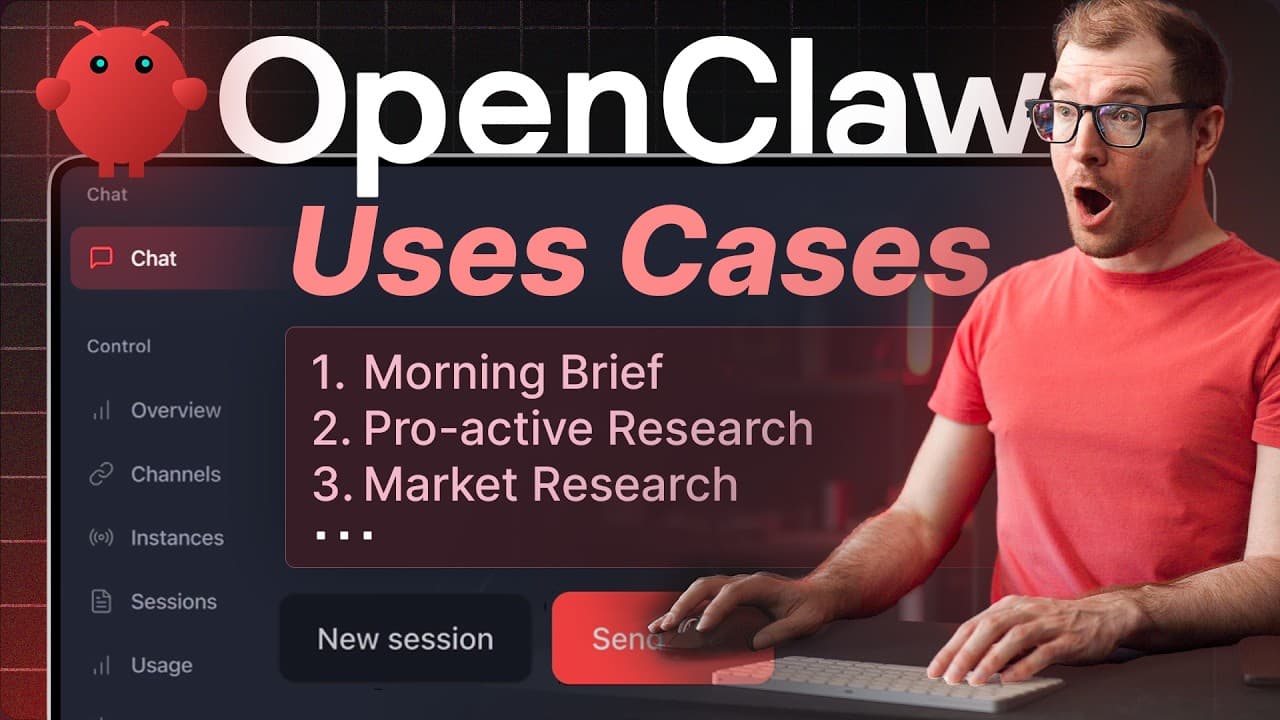
How to Use OpenClaw for Business Without 30 Hours of Setup
The "OpenClaw tax" is real. On Reddit, specifically in communities like r/OpenClaw and r/openclawsetup, the sentiment is shifting from excitement to exhaustion. Users report spending 30, 60, or even 70 hours just to get their "autonomous" agent to perform basic business tasks. They are debugging Docker containers, fighting with memory plugins, and trying to figure out why their agent "doesn't work" after a few hours of operation.
If you are a business owner, you don't have 30 hours to spend on infrastructure. You need outcomes. This guide shows you how to bypass the "setup tax" and get the power of OpenClaw without the maintenance nightmare.
The Problem: The "Empty Box" Reality
Most people approach OpenClaw like a standard piece of software: install it and use it. But OpenClaw is a framework, not a finished product. When you first install it, you are staring at an "empty box."
To make it useful for business, you have to:
- Build Connectors: Wire it to Shopify, GA4, Stripe, or your CRM.
- Define SOPs: Teach it your refund policy, lead qualification rules, and reporting structure.
- Manage Memory: Prevent the agent from getting "dumber" as the conversation grows.
- Maintain Stability: Patch CVEs and breaking changes daily.
As one user on r/openclawsetup noted: "Most OpenClaw setups look fine until you actually watch what’s executing. You get outputs, but unless you're watching closely, you don't know what ran, what retried, or what failed silently."
The Setup Reality: Why It Takes 30+ Hours
The 30-hour setup isn't because the software is bad—it's because business logic is complex. The sheer amount of orchestration required to turn a reasoning model into a functional employee is the primary bottleneck of 2026.
| Task | Estimated DIY Time | Why it's hard |
|---|---|---|
| Infrastructure | 4-6 Hours | Docker, WSL2, VPS, and security hardening. |
| Tool Integration | 8-12 Hours | Mapping API schemas and handling rate limits. |
| Logic & SOPs | 10-15 Hours | Writing SKILL.md files that actually work. |
| Memory Tuning | 5-10 Hours | Preventing context loss and hallucination. |
For a founder, this represents over $3,000 in labor value just to reach the starting line. And that doesn't include the ongoing maintenance. When you factor in the "CVE-of-the-day" reality of open-source AI, the maintenance alone can become a half-time job for a technical co-founder.
The Complexity of Tool Use
In a raw OpenClaw environment, a simple request like "Summarize my Shopify sales" requires the agent to browse a web interface or use a custom tool. If the UI changes (which it does weekly), the tool breaks. If the API rate limits you, the agent loops. Solving these "edge cases" is what eats the 30 hours.
According to the NIST AI Risk Management Framework, the risk profile of high-permission agents is significant. Configuring these securely requires a level of expertise that most e-commerce founders don't possess. This creates a "Security vs. Utility" trade-off that DIY users often lose.
The BiClaw Solution: Managed Business Intelligence
BiClaw is built on the same engine as OpenClaw, but it removes the "empty box" problem. We ship with Skills-First Architecture. Instead of building the "hands" (connectors) and the "brain" (logic) yourself, you use our pre-hardened, pre-configured business skills.
1. BI-First Intelligence
Traditional agents "chat" with your data. BiClaw lives in it. Our native connectors for Shopify, Stripe, and Google Ads understand the underlying schema. When you ask for a ROAS report, BiClaw isn't guessing—it's calculating based on governed data. This eliminates "metric drift"—the phenomenon where an AI reports three different numbers for the same KPI across different threads.
2. Guardrails by Default
You don't need to write custom code to prevent your agent from "going rogue." BiClaw includes built-in approval gates. Any action that moves money or contacts a customer requires a "thumbs up" from you on Telegram or WhatsApp. This aligns with McKinsey’s findings on AI productivity: human-in-the-loop is the key to safe and profitable automation.
3. Outcomes Over Infrastructure
We handle the Docker containers, the security patches, and the model routing. You focus on the strategy. By abstracting away the "plumbing" of AI, we allow you to focus on high-level growth tasks like product development and brand building.
ROI: The True Cost of "Free"
Founders often choose DIY OpenClaw because it's "free" (minus API tokens). But when you factor in the setup tax, the "free" option becomes the most expensive one.
- DIY Setup Cost: 30 hours x $100/hr = $3,000
- DIY Maintenance: 5 hours/week x $100/hr = $2,000/month
- BiClaw Cost: $29/month (for the same engine, fully managed)
By choosing a managed alternative, you protect your most valuable asset: your time. The return on investment for a managed assistant isn't just in the tasks it completes, but in the bandwidth it returns to the operator.
Comparison Table: DIY Framework vs. Managed Assistant
| Feature | DIY OpenClaw | BiClaw Managed |
|---|---|---|
| Setup Time | 30+ Hours | < 2 Hours |
| Maintenance | High (Manual) | Zero (Automated) |
| Connectors | DIY Shells | Native BI Connectors |
| Memory | Plugin-based | Governed Semantic Layer |
| Channels | Complex (DIY) | Native WhatsApp/Telegram |
| Security | Your responsibility | SOC2-aligned governance |
How to Get Started in 5 Minutes
- Connect Your Store: Use our OAuth wizard to link Shopify and GA4.
- Enable the Morning Brief: Get your sales and ROAS summary on Telegram every day at 7:30 AM.
- Set Your Policies: Define your lead qualification rules in plain English.
The businesses that win in 2026 are not the ones with the "smartest" prompt—they are the ones with the most reliable execution. Stop building the box. Start operating the business.
Related Reading
- /blog/openclaw-vs-competitors-2026-business-guide
- /blog/digital-workers-for-smb-2026
- /blog/why-your-business-needs-a-bi-first-ai-assistant-beyond-the-empty-box
- /blog/sop-to-autopilot-using-ai-agents
Ready to fire your infrastructure and hire an assistant? Start your 7-day free trial of BiClaw.
Sources: NIST AI Risk Management Framework | McKinsey — The state of AI 2024