The ROI of Agentic Ops: Moving Beyond "Hype" in 2026
Calculate the true ROI of agentic operations in 2026. Guide to labor value, recovered revenue, and decision velocity for SaaS and agencies.
Vigor
The ROI of Agentic Ops: Moving Beyond "Hype" in 2026
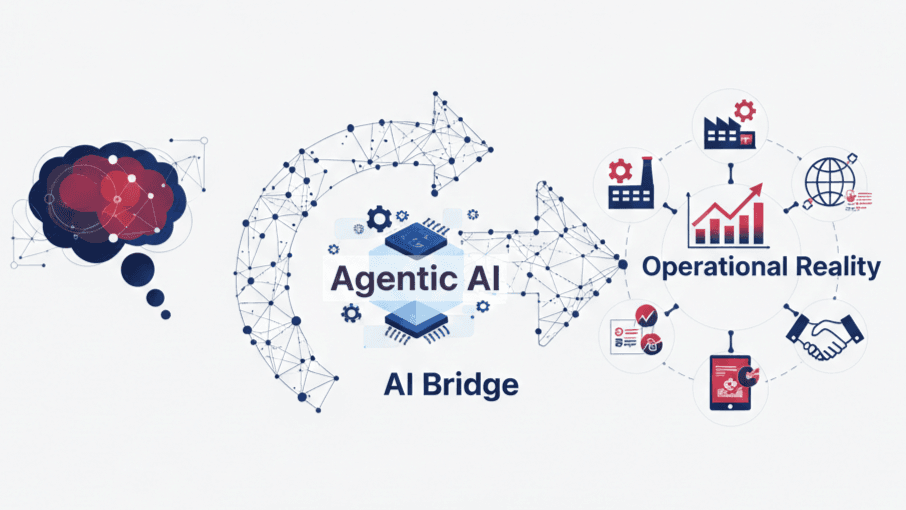
By March 2026, the initial "AI hype" has been replaced by a cold focus on Return on Investment (ROI). For SaaS founders and agency owners, the question is no longer "What can AI do?" but "How much margin did it recover today?" This guide breaks down the true ROI of agentic operations and how to move from experimental bots to production-grade agents that pay for themselves in under 14 days.
TL;DR
- The ROI Formula: Labor Value + Recovered Revenue - Tool Cost.
- Time to Payback: Production-grade agents like BiClaw target a <14 day payback period.
- Agentic vs. Manual: Organizations deploying AI agents report reducing manual labor by 40-60%.
- Decision Velocity: Automating data reconciliation leads to 10x faster decision cycles.
- Case Study: A SaaS team saved $6,000 in monthly ops costs by delegating reconciliation and reporting.
Why "Chat" is a Cost, but "Ops" is an Asset
If you are paying for an AI tool just to "chat" with it, you are adding to your overhead. Chat is a manual activity. Agentic Ops is an asset. An agent that runs on a cron job, reconciles your Stripe data, and flags a churn risk is performing a high-value operational task without human intervention.
The shift in 2026 is moving from "AI as a feature" to "AI as infrastructure."
The 3 Levers of Agentic ROI
1. Labor Value (The Time Back Lever)
This is the most direct metric for any lean team. How many hours did your team spend on "drudge work" before the agent was deployed? In a typical SaaS or agency environment, these tasks are often invisible because they are spread across the whole team.
- Manual Reporting: 5 hours/week -> 0 hours. Pulling data from five dashboards to create one internal slide deck.
- CX Triage: 10 hours/week -> 2 hours (approvals only). Categorizing tickets and drafting initial responses.
- Competitor Tracking: 3 hours/week -> 0.5 hours (review only). Checking rival pricing and ad libraries.
Total labor reclaimed: ~15.5 hours/week. At a $50/hr blended rate, that is $3,100/mo in labor value. This is not "theoretical" value; this is time that can now be re-invested into product development, high-level client strategy, or sales outreach.
2. Recovered Revenue (The Margin Lever)
Agents find the money that humans miss because they don"t get tired and they don"t skip the "boring" parts of the data. In 2026, profit is won in the margins.
- SKU Profit Leaks: An agent monitoring SKU-level profit might catch an unprofitable ad set or a shipping surcharge error 3 days earlier than a human. If your daily spend is $500, that is $1,500 in wasted spend saved.
- Churn Prevention: An agent that flags a VIP user who has stopped logging in 30 days before their renewal protects their Lifetime Value (LTV). If that customer is worth $2,000, that is revenue that would have otherwise walked out the door.
- Stockout Prevention: Drafting a Purchase Order (PO) 7 days earlier based on real-time velocity protects against missed sales. If a stockout costs $1,000 in revenue, the agent has just paid for its subscription for the year.
3. Decision Velocity (The Growth Lever)
In a competitive market, speed is a moat. An agent that delivers a comprehensive ops brief at 7:30 AM allows you to make spend decisions before the 9:00 AM rush. This "Decision Acceleration" doesn"t show up on a spreadsheet easily, but it is why leading brands are out-performing laggards.
When your competitor is still assembling their morning report at 10:30 AM, you have already adjusted your ad bids, responded to the top 10 leads, and started your deep work. This compounding advantage is the "hidden" ROI of agentic operations.
Learn about the "Scheduled Wins" pattern here: /blog/scheduled-wins-3-agents-lean-teams-2026.
The Hidden Cost of DIY "Hobby" Agents
Many founders are tempted to build their own agents using raw frameworks to "save money." However, the Setup Tax on DIY agents is often the biggest ROI killer.
To build a production-grade agent that is secure, reliable, and grounded in your BI, you typically need 20+ hours of high-level engineering or founder time. At a $150/hr internal rate, that is $3,000 in initial setup cost. If the agent breaks every time an API updates, you add another 5 hours/month in maintenance.
By contrast, a "Skills-First" assistant like BiClaw arrives with the logic pre-built. You spend 1 hour connecting your data and 0 hours maintaining the "transmission."
Comparison: DIY Bot vs. Production-Grade Agent
| Feature | DIY Experimental Bot | Production-Grade Agent (BiClaw) |
|---|---|---|
| Setup Cost | 20+ hours (Founder/Eng time) | <2 hours (Skills-First) |
| Reliability | "Fingers crossed" | Policy-Enforced (HITL) |
| Maintenance | Constant prompt tuning | Pre-maintained Skills |
| Payback Period | 2-3 Months | <14 Days |
| Total ROI | Negative (if labor is factored) | High Positive |
Mini-Case: $6,000 Monthly Savings for a SaaS Ops Team
Context: A 15-person SaaS team was buried in "data debt." The Problem: One full-time ops manager spent 50% of their time reconciling revenue between Stripe, their internal DB, and their bank feed to find discrepancies in MRR reporting. The Intervention: They deployed a "Revenue Sentinel" agent on BiClaw. The Result:
- Accuracy: The agent found $1,200 in "lost" MRR from a billing sync error in the first 48 hours that had been missing for two months.
- Time back: The ops manager reclaimed 20 hours/week, which they shifted to high-value product strategy and user research.
- Net Benefit: $4,000 (labor value) + $2,000 (recovered revenue/prevention) - $79 (Pro plan) = ~$5,900/mo Net ROI.
How to Audit Your Agent ROI (3-Step Framework)
If you"ve been running AI agents for 30 days, run this audit to ensure you are getting real value:
- The Time Test: Has anyone on the team actually stopped doing a specific task? If they are just "checking the AI"s work" for the same amount of time they used to spend doing the task, the ROI is zero. You must move to a "Review-by-Exception" model.
- The Decision Test: Did we make a material move this month—such as pausing an ad, ordering inventory, or contacting a customer—based on an agent"s alert that we would have otherwise missed or delayed?
- The Budget Test: Is the monthly tool cost + API spend < 10% of the labor value and recovered revenue it generated? For BiClaw users, this number is typically < 2%.
For more on setting up these high-ROI workflows, see: /blog/sop-to-autopilot-using-ai-agents.
Governance: Protecting the ROI from "Runaway Agents"
The only way to lose money on agents in 2026 is through unmanaged execution. Runaway loops or hallucinations can burn tokens and create "cleanup work" for your team.
- Token Caps: Set hard daily limits on what an agent can spend.
- Approval Gates: Use a "Draft-Only" permission for any action that affects a customer or a budget.
- Audit Trails: Ensure every decision is logged so you don"t spend time wondering "Why did it do that?"
Aligning with the NIST AI Risk Management Framework (https://www.nist.gov/itl/ai-risk-management-framework) is the best way to ensure your agentic ROI stays in the green.
Conclusion: Focus on the Payback, Not the Prompt
In 2026, don"t settle for "cool" AI or "impressive" demos. Demand "profitable" AI. By moving to agentic operations grounded in your actual business intelligence, you turn a cost center into a growth engine. Reclaim your time, protect your margins, and accelerate your growth by hiring an agent that brings its own resume to the job.
Ready to see your real ROI? Start your 7-day free trial of BiClaw today at https://biclaw.app.
Related Reading
- /blog/saas-is-dead-ai-agents-are-the-new-business-standard
- /blog/scheduled-wins-3-agents-lean-teams-2026
- /blog/sop-to-autopilot-using-ai-agents
- /blog/why-your-business-needs-a-bi-first-ai-assistant-beyond-the-empty-box
Sources: McKinsey — The state of AI 2024 | NIST AI Risk Management Framework