How AI Agents Catch SKU-Level Profit Leaks in 2026
Learn how AI agents identify silent SKU-level profit leaks in Shopify stores. Move from passive dashboards to proactive profit defense in 2026.
Vigor
How AI Agents Catch SKU-Level Profit Leaks in 2026
TL;DR
- Most Shopify merchants overestimate true profit by 15–30% because they miss hidden SKU-level costs.
- The "Gross vs. Net" trap hides silent leaks in shipping, fees, and ad attribution that blended store margins can"t catch.
- AI agents now monitor these leaks 24/7, moving from passive dashboards to proactive "Profit Defense."
- Mini-case: A DTC brand saved $14,200 in monthly margin by identifying three "Hero" products that were actually losing money.
- Implementation: Connect your store to a BI-first assistant, set materiality thresholds, and enable automated profit alerts.
The Silent Profit Leaks of 2026
In 2026, "Revenue" is a vanity metric. With rising customer acquisition costs (CAC) and complex global logistics, the only metric that matters is Contribution Margin per SKU.
Many merchants look at their Shopify dashboard, see a healthy green line, and assume all is well. But beneath that blended margin, individual products are often leaking cash. On Reddit platforms like /r/Shopify and /r/SaaS, merchants are reporting that they often overestimate their actual profit by as much as 30% because they miss the "granularity of the leak."
Common silent leaks include:
- The Ad Spend Black Hole: Products with high conversion rates but even higher CAC that eats the entire margin.
- The Shipping Squeeze: Heavy or bulky items that have a positive margin until the 2026 fuel and carrier surcharges are applied.
- The Return Ripple: Best-sellers with a high return rate that effectively creates a negative LTV (Lifetime Value).
For a deeper look at the 2026 landscape, see our guide on DTC AI Agents & Workflow Automation.
Why Your Dashboard Is Lying to You
Traditional e-commerce dashboards are passive. They show you what happened yesterday, but they don"t tell you what is currently breaking. This is the "Gross vs. Net" trap. Shopify shows you sales; it does not automatically reconcile your Facebook ad sets, your warehouse storage fees, and your payment processing deltas at the SKU level.
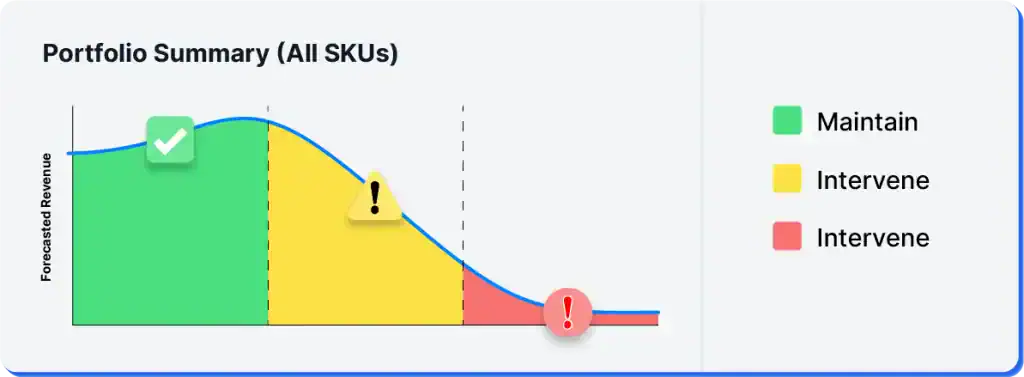
This is where Agentic Profit Defense comes in. Instead of you logging in to find a leak, an AI agent watches every transaction and alerts you when a product’s real-time margin falls below your threshold.
Comparison: Passive Analytics vs. Agentic Profit Defense
| Dimension | Passive Analytics (Dashboards) | Agentic Profit Defense (AI Agents) |
|---|---|---|
| Detection | Manual (You find the leak) | Proactive (The agent alerts you) |
| Granularity | Blended store margin | Per-order and Per-SKU margin |
| Data Scope | Single platform (Shopify) | Multi-platform (Shopify + Ads + Logistics) |
| Speed | T-1 Day (Reactive) | Real-time (Proactive) |
| Output | Charts and graphs | Alerts and Actionable Memos |
For more on the difference between tools and agents, see: /blog/saas-is-dead-ai-agents-are-the-new-business-standard.
The 3 Pillars of AI-Driven Profit Defense
1. Unified Cost Attribution
An AI agent joins your Shopify orders with your real-time spend on Meta, Google, and TikTok. It doesn"t just see "Orders"; it sees the Fully Loaded Cost of Sale. It attributes every dollar of spend to the specific SKU it was meant to move.
2. Materiality Thresholds
You don"t need an alert for every cent. You need an alert when a "Hero" product’s margin drops by 5% or when a specific ad set starts burning budget without a corresponding lift in net profit. Agents use threshold logic to filter the noise.
3. Proactive Decision Memos
Instead of just a "Red Alert," the agent delivers a memo: "SKU-123 is losing $2.50 per unit today due to a spike in Meta CPC. Suggest pausing Campaign-A or raising price by $4 to maintain target margin."
Mini-Case: The $14,200 Margin Recovery
Context: A mid-market home goods brand (~$520k/mo revenue) was celebrating a record sales month. However, their bank balance wasn"t reflecting the growth.
The Investigation: They deployed a BiClaw Profit Defense Agent to audit their top 20 SKUs.
The Findings:
- Product A (Best-seller): Had a 65% gross margin but a 22% return rate and high shipping surcharges. Its actual contribution margin was -4%.
- Product B (Ad Hero): Was receiving 60% of the ad budget but its CAC had doubled over 14 days, leading to a break-even performance that was "hidden" by the success of organic products.
- Product C (The Leak): A pricing error in a bundle meant customers were effectively getting a $15 discount that wasn"t being tracked in the blended "Discount" report.
Results (30 Days):
- Margin Recovered: $14,230/month by pausing the bundle and reallocating spend away from Product A.
- Efficiency Lift: The founder saved 12 hours a week previously spent on manual "profit hunting" in spreadsheets.
- ROI: The system paid for its annual cost in the first 72 hours of operation.
Table: Common SKU-Level Profit Leaks & Agent Responses
| Leak Type | Signal Detected | AI Agent Action |
|---|---|---|
| Ad Burn | SKU CAC > Gross Margin | Draft a "Pause Ad Set" alert; suggest creative swap |
| Shipping Hike | Actual Shipping > Estimated Shipping | Flag SKU for weight/dim audit; update shipping rules |
| Refund Spike | SKU Return Rate > 15% | Surface common refund reasons; suggest PDP update |
| Bundle Drift | Bundle Price < Sum of COGS | Alert on negative margin bundle; propose price floor |
| Inventory Tax | Velocity < 14 days (Overstock) | Suggest a "Flash Sale" for slow-movers to free capital |
Learn more about turning these insights into autopilot here: /blog/sop-to-autopilot-using-ai-agents.
How to Start Catching Leaks in 14 Days
Day 1–4: Ground the AI in Your BI
Don"t use an "empty box" AI. You need a BI-first assistant that understands your Shopify and Ads APIs natively. See our guide on Skills vs. Shells to understand why this matters.
Day 5–10: Set Your Profit Policies
Define what "healthy" looks like for your business.
- "Alert me if any SKU margin falls below 20%."
- "Audit any order where shipping is >25% of the total value."
- "Flag any ad set where ROAS is < 2.0 for 48 hours."
Day 11–14: Move to Managed Alerts
Start receiving your Morning Ops Brief. Review the agent"s findings and click "Approve" on suggested actions (like pausing an ad or updating a price).
Governance: Operating Safely in 2026
As with all autonomous systems, safety is paramount. Follow the NIST AI Risk Management Framework and ensure your agents operate with Least Privilege. An agent should be able to suggest a price change, but a human should always be the one to confirm it.
For a deeper dive into security, read our OpenClaw Security & Stability Guide.
Conclusion: From Passive to Proactive
The merchants who win in 2026 aren"t the ones with the most sales; they are the ones with the tightest margins. Stop hunting for leaks in your spreadsheets. Hire a digital worker to do the hunting for you so you can focus on building your brand.
Ready to find your silent profit leaks? Start a 7-day free trial at biclaw.app and get your first SKU-level audit by tomorrow morning.
Related Reading
- The 2026 DTC Revenue Recovery Playbook
- Why Your Business Needs a BI-First AI Assistant
- AI Agents for E-commerce: Beyond the Empty Box
- Cron-Native Commerce Agents: From Briefs to Ad Iterations
Sources: McKinsey — The state of AI 2024 | NIST AI Risk Management Framework | Reddit /r/Shopify Discussions 2026